

TL;DR: AI tools are quick to sign up for, and the costs tend to spread quietly across teams. Whether people enjoy using them tells you very little. The real test is what has measurably changed since each tool arrived: quicker replies to customers, less repetitive admin, work moving through the business faster. If you can’t point to an improvement, go back to a specific problem, choose a tool that fits it, and review it after a few months.
Most business owners can list the AI tools they’re paying for. Ask which of those are giving something back and the answer usually gets vaguer. A simple gut check: if one of those subscriptions was cancelled tomorrow, would anybody notice before the next invoice landed?
Easy to buy, harder to judge
Adding an AI tool takes a couple of minutes and a card number. Overnight your team has a new way to draft emails, summarise documents or automate a dull job.
The harder part comes a few months later, when someone has to say whether the business is better off for it.
Saving five minutes here and ten minutes there feels productive. Those small gains don’t always add up to anything you can see, though. If people are still working the same hours, customers are waiting just as long and projects are finishing no sooner, the saved time has gone somewhere. Usually nobody has tracked where.
How the AI conversation has shifted
A year or so ago, most discussion about AI was about what it might be able to do. That has moved on. Business owners are now asking whether each tool is pulling its weight next to the accounting software, the CRM and the Microsoft 365 licences already on the bill.
Every technology purchase should have a job to do. That could be cutting admin, getting back to customers sooner, improving the quality of work going out of the door, or taking on more clients without recruiting. Whatever the job is, you should eventually be able to point at something and say it works better than it did before.
If you can’t, AI is simply one more line on the direct debit list.
Not sure where to start?
Let's talk it through.
Have a quick, no-obligation call with our team.
No pitch, just answers.
How AI costs spread without anyone noticing
Part of the problem is that AI spending rarely sits in one place. Sales signs up to a writing assistant. Someone in operations starts paying for meeting summaries. Marketing adds an image generator, and a manager upgrades to a premium chatbot for one feature they like. Each one looks small. Together, often spread across different cards and expense claims, they mount up quickly.
The subscription isn’t the whole cost either. Every new tool has to be set up and, in many cases, connected to your other systems. Staff need time to learn it. Someone has to check it meets your security standards and decide what company data it’s allowed to see, which is a bigger job than it sounds once customer information is involved.
It’s also worth knowing exactly what you’re buying. Plenty of products sold as AI are ordinary automation with a new label, which we covered in our blog Automation vs AI: Which One Are You Paying For?. Before long you can find yourself spending as much time managing the tools as using them.
Measure what has changed
Whether the team likes a tool is a poor measure of its value. A far better question is what has changed since it arrived. For example:
- Are customer enquiries getting a reply faster than before?
- Has time spent on repetitive tasks such as data entry, chasing and reformatting gone down?
- Are jobs and projects moving through the business more quickly than six months ago?
- Could the same team now handle more work?
Those are the improvements that justify the spend. If you already collect figures like response times or job turnaround in your CRM or helpdesk, use them as a before-and-after comparison. If you’re about to introduce a new tool, note those figures now so you have something to compare against later.
While you’re at it, look for overlap. It’s common to find two or three tools doing the same job, or a paid add-on duplicating something your existing software already does.
If the answers aren’t clear
Struggling to answer those questions doesn’t automatically mean AI was a bad decision. More often, the business never agreed what success would look like in the first place.
That’s the point to change approach. Start with a specific problem you want to solve, then pick the technology that fits it, rather than the other way round. Decide how you’ll measure the result, give it a few months, and then look back honestly. Keep what earns its place and cancel what doesn’t.
Get a second opinion on your AI spend
If you’d like help reviewing the AI tools your business is paying for, including whether they’re delivering value, whether they overlap and whether they meet your security standards, our team works with businesses across Chester, North Wales, the Wirral and Wrexham and we’d be happy to take a look.
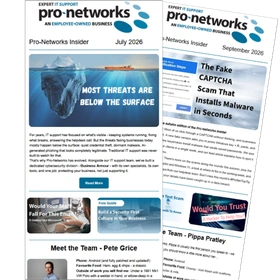
The Pro-Networks Insider
Delivered to your inbox every other month
The scams currently targeting businesses like yours.
A #ProNetTopTip that your team can put into practice in minutes.
Plain English updates on Microsoft 365 and IT changes that affect you.